Diné dóó Gáamalii book now available

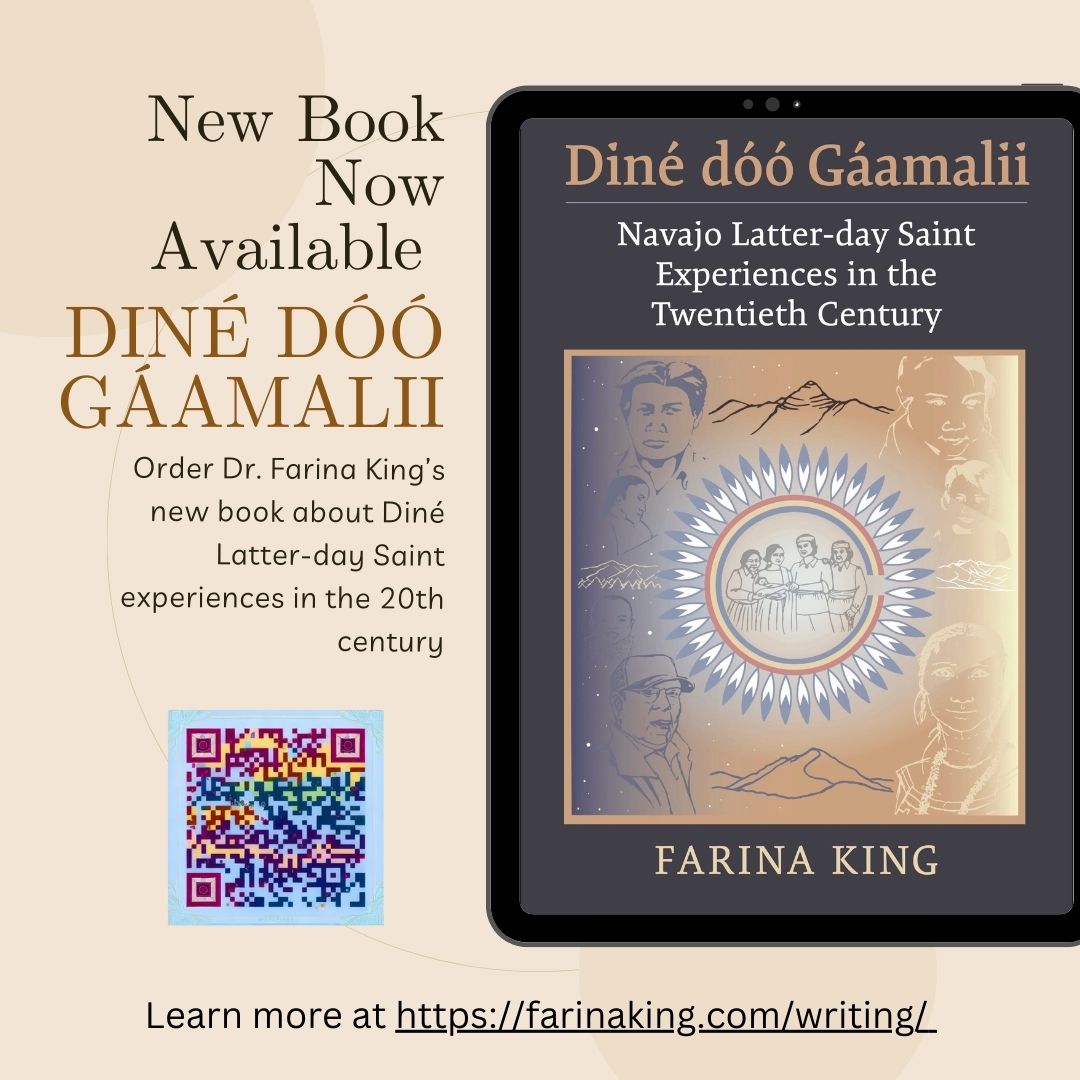
My newest book, Diné dóó Gáamalii, is now available. I am honored that the Lyda Conley Series on Trailblazing Indigenous Futures published the book through the University Press of Kansas (UPK). I enjoyed working with the UPK with my first book. In college, one of the first impactful books that I read was David Wallace Adams’s Education for Extinction that UPK published as well. I recently wrote a blog piece with Tai S. Edwards in honor of Adams.

Diné dóó Gáamalii (“Navajo and Mormon”) focuses on Diné Latter-day Saint experiences in the Southwest Indian Mission, congregations, and church educational programs such as the Indian Student Placement Program, seminaries, and Brigham Young University American Indian services and studies. This book features the voices of Diné Latter-day Saints from oral histories, the development of their communities, and how their embrace of The Church of Jesus Christ of Latter-day Saints affected their Diné identity between the 1950s and early 2000s.

My book addresses how Diné Latter-day Saints like my father developed and engaged with a community that faced a flux of challenges and contradictions in the late twentieth century. Diné dóó Gáamalii communities persisted through tense linkages of different Diné, Indigenous, and Mormon peoples. My contribution of this book, Diné dóó Gáamalii, is to couch a narrative of twentieth-century Native American Latter-day Saints in the intersecting, although sometimes conflicting, contexts and circles of Diné and Latter-day Saint communities through Diné Latter-day Saint perspectives.

There are many people and groups that supported this work and made it possible.

Thank you for your consideration! Ahéhee’!

Call for Proposed Chapters to Edited Volume “Written to the Lamanites”

Art by Nazbah

Call for Chapter Proposals to Edited Volume based on workshop theme of “Indigenous Perspectives on the Meanings of ‘Lamanite’”

We write to announce a call for chapter proposals for an edited volume tentatively titled, “Written to the Lamanites: Indigenous Perspectives on Lamanite Discourses.’” Chapter proposals are due by September 5, 2023.

The Book of Mormon styles itself as a record “written to the Lamanites,” descendants of the House of Israel who left Jerusalem and populated the Americas a millennia before the arrival of Europeans. Later followers of Joseph Smith, Jr. expanded the category to include peoples of the Pacific. Since Smith’s day, Latter-day Saints have used the term “Lamanite” to make sense of the world and to assign space in various religious frameworks for peoples Indigenous to the Americas and the Pacific. This has served to attract people to, and repel people from, Smith’s movements inasmuch as “Lamanite” works as a term of liberation as well as a constraint.

This edited volume will represent a community of scholars who address the category of “Lamanite,” centering on Indigenous voices concerned with questions of identity, race, religion, settler colonialism, politics, and the relation of “Lamanite” to other facets of life. This volume will include different academic approaches and, most importantly, Indigenous methodologies and protocols from the communities in which these scholars are rooted.

This proposed volume stems from recent workshops aimed at supporting the community of scholars interested in reflecting collaboratively on the discourses of “Lamanite.” The edited volume, however, will be inclusive of scholarship developed independent of the workshops. We encourage those with strong ties to Indigenous communities to submit chapter proposals based on their work relating to these discourses. 

Scholarly approaches of all kinds will be considered, including studies relating to Indigenous experiences with The Church of Jesus Christ of Latter-day Saints, Community of Christ, Fundamentalist Church of Jesus Christ of Latter-day Saints, and/or any other religious group based on the teachings of Joseph Smith. This volume will bridge Indigenous Studies and Mormon Studies by examining the complex ways that Indigenous peoples have interpreted the notion of “Lamanite” as introduced in the Book of Mormon as well as the ways Indigenous communities have been affected by the discourses and practices derived from the text.

The volume editors, Dr. Farina King (Diné) of the University of Oklahoma and Dr. Michael D. K. Ing (Kanaka ʻŌiwi) of Indiana University, will review the proposals and coordinate with the contributing authors and publisher for further development of the project. Final acceptance of the chapter will be determined by the publisher.

For the proposal, submit a CV and a chapter abstract (no more than 500 words). Proposals should be emailed to lamanitemeanings@gmail.com, addressed to Farina King and Michael Ing, as a single PDF by Tuesday, September 5, 2023 to be considered.

Here is the attached CFP flyer:

Ahéhee’ and Mahalo (Thanks) for your consideration. We look forward to the possibility of collaborating and coming together in this work. 

Special thanks to our committed sponsors that have made this intellectual community and initiative possible: the Laura F. Willes Center for Book of Mormon Studies, the Charles Redd Center for Western Studies, and Department of History at Brigham Young University; the American West Center, Department of History, and Mormon Studies at the University of Utah; Mormon Studies at Utah State University; Mormon Studies at Claremont Graduate University; Signature Books; the Center for the American West at the University of Colorado-Boulder; Sunstone; the Mormon History Association; Dialogue: A Journal of Mormon Thought; the Museum of Mormon History of the Americas; the National Museum of American Religion; Global Mormon Studies; Mormon Social Science Association; Utah Division of State History; Mormon Studies at the University of Virginia; and other partners and scholars from throughout the world. We also thank Diné artist M. Nazbah for her art designed for this collaborative work.

Michael David Kaulana Ing, Ph.D.

Professor

Department of Religious Studies

Indiana University

https://religiousstudies.indiana.edu/about/faculty/ing-michael.html

Farina King, Ph.D.

Horizon Chair of Native American Ecology and Culture

Associate Professor

Department of Native American Studies

University of Oklahoma

https://www.ou.edu/cas/nas/people/farina-king

2nd Workshop & Symposium of Indigenous Perspectives on the Meanings of “Lamanite”

Dr. Farina King and Dr. Michael Ing are co-organizing the second rendition that follows the inaugural workshop, Indigenous Perspectives on the Meanings of “Lamanite,” which was first held in August 2022 at the University of Utah.

For this second gathering, it will be hosted by the Claremont Mormon Studies Program at Claremont Graduate University (CGU), April 28-29, 2023, in Claremont, California with a virtual option to attend Saturday’s symposium. Our meeting will serve as Claremontʻs annual Mormon Studies Conference, which will include a full day of public presentations on April 29.

Continue reading →

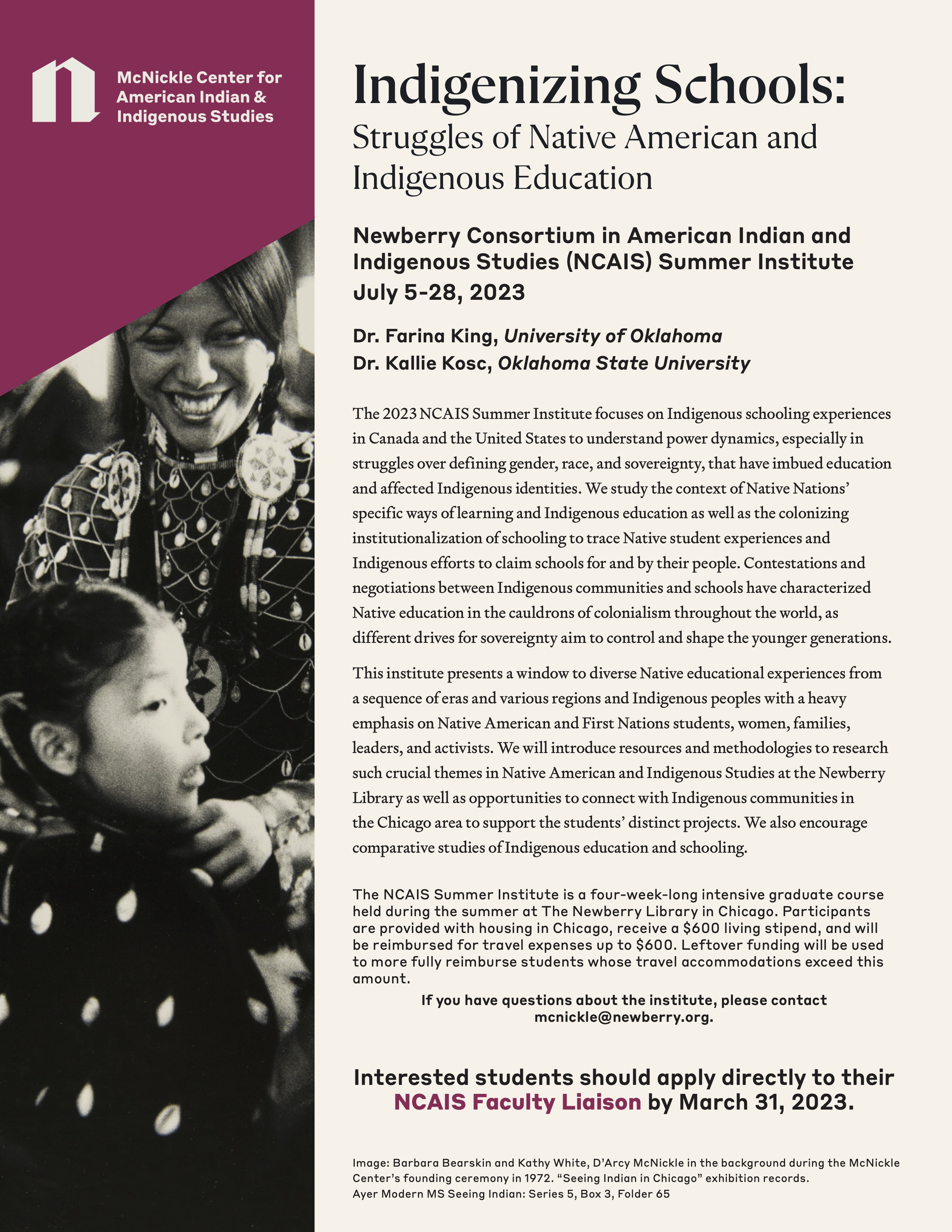
Newberry Consortium in American Indian and Indigenous Studies (NCAIS) Summer Institute July 5-28, 2023

The McNickle Center for American Indian and Indigenous Studies invites applications to the Newberry Consortium in American Indian and Indigenous Studies (NCAIS) Summer Institute for July 5-28, 2023, which focuses on the theme of “Indigenizing Schools: Struggles of Native American and Indigenous Education” that I (Dr. Farina King, University of Oklahoma) and Dr. Kallie Kosc (Oklahoma State University) will co-teach.

The Newberry Consortium in American Indian and Indigenous Studies (NCAIS) provides essential training for graduate students in Indigenous Studies. Every year, students from member universities [that includes the University of Oklahoma] are invited to hone their research skills at a spring workshop, delve into the Newberry collection during a summer institute, and present their work at a graduate conference.

Applications for the graduate NCAIS Summer Institute should be directed to the NCAIS faculty liaison at the member institution by March 31, 2023. If you are a graduate student at the University of Oklahoma, contact the NCAIS liaison Dr. Warren Metcalf at w.metcalf@ou.edu if you are interested and want to apply for this summer institute. 

Learn more about the NCAIS at https://www.newberry.org/research/research-centers/mcnickle-center/consortium. See the flyer for details about the summer institute.

Thank you for your consideration and help spreading the word!

24-25 March 2023 Hybrid Conference about Native American Boarding Schools

Accessibility, Archives, and Native American Boarding Schools: Pathways for Catholic History, March 24-25, 2023

This announcement about the conference was drafted by Patrick Hayes.

This two-day, hybrid conference brings together academic historians and archivists to discuss Native American Boarding Schools and the recorded legacy of the Catholic Church in their operation, roughly from 1819 to 1969. The conference is sponsored by the American Catholic Historical Association and is funded through the ACHA’s SHARP grant—a one-year project designed to place historians, archivists, and members of Native communities in conversation and collaboration. 

Attendees at this two-day conference will hear from ten invited participants who were selected to present on their current or past work and the overarching theme of accessibility—to Catholic archival repositories, to new knowledge or understandings, to new issues affecting tribal histories, especially in relation to the Church, and so forth. They will present formal papers of 20 minutes in duration followed by questions and comments from the audience, both on-site and online. Over the course of two days, three contemplated sessions of an hour and a half each, plus another group round table will give closure to our conference. Registration details, along with the full program, may be found here:

www.achahistory.org/sharp2023

Please save the dates: March 24-25, 2023. For further information, please contact the ACHA grant coordinator, Dr. Patrick Hayes (pjhayesphd@gmail.com).

Patrick Hayes, Ph.D.

Redemptorist Archives

Philadelphia, PA

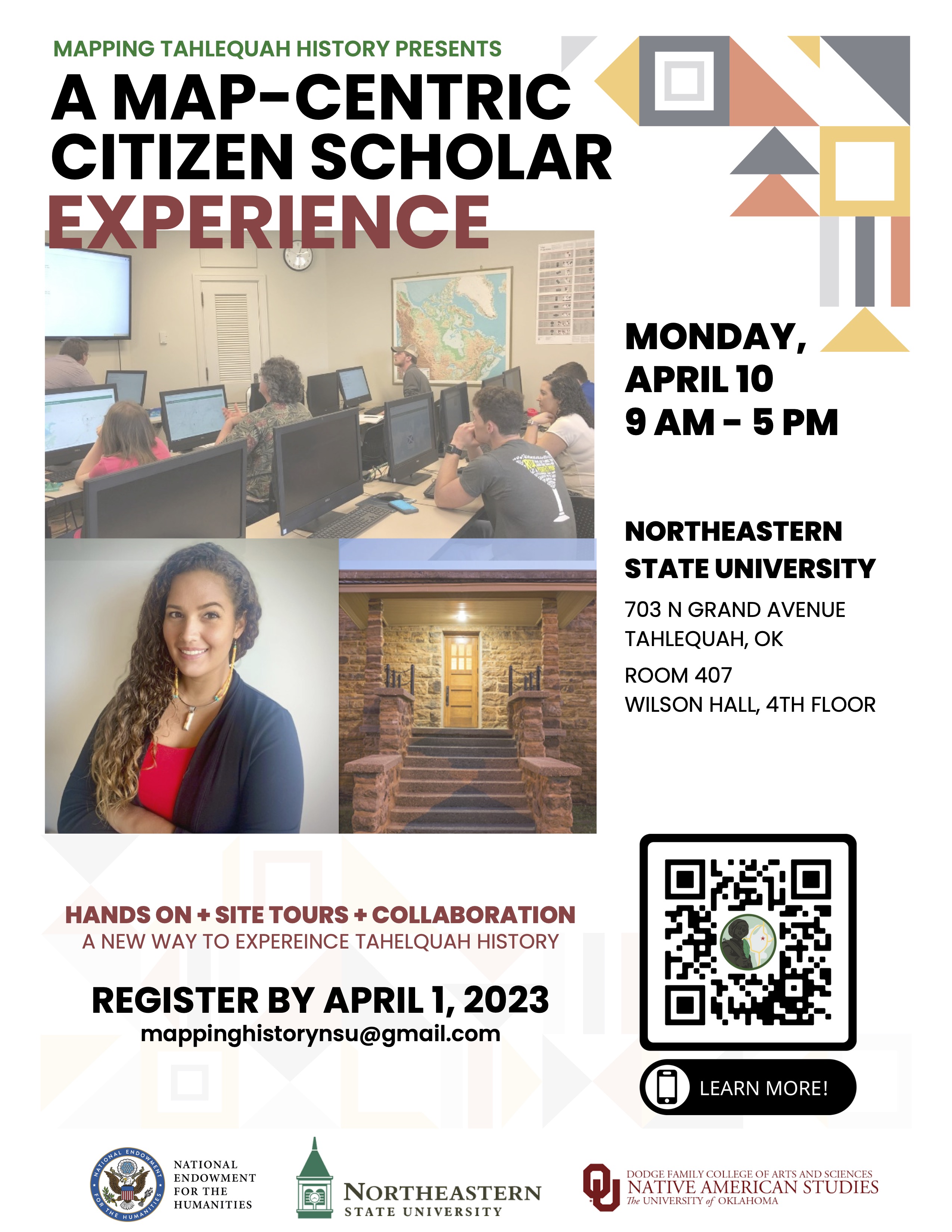
10 April 2023 Mapping Tahlequah History Workshop

Yá’át’ééh/ᎣᏏᏲ (Osiyo)/Havé/Hensci/Halito/Marúaweeka!

We would like to invite you and anyone you know who might be interested and available to attend the Mapping Tahlequah History (MTH) Workshop on Monday, April 10 (9 am-5 pm) that will be held in Tahlequah, capital of the Cherokee Nation and United Keetoowah Band of Cherokees (Wilson Hall on the campus of Northeastern State University at 703 N Grand Ave. Tahlequah).

The workshop and 3 pm keynote talk (featuring Dr. Elizabeth Rule and the Indigenous DC app) are free and open to the public (with registration required by April 1st for the 9 am-3 pm sessions of the workshop due to limited space). 

Mapping Tahlequah History is a project based at Northeastern State University (NSU) with collaborators at the University of Oklahoma and different organizations and communities. MTH supports student immersive learning and development of a public educational digital humanities interactive map and accompanying database focused on local histories. The map and database help make local historical information more accessible by providing students and other users with links to documents and other resources such as videos and pictures. The project highlights Cherokee and diverse regional histories of Tahlequah and surrounding areas of what is known as Green Country in Northeastern Oklahoma. 

This community-centered work-in-progress focuses on Indigenous and racial histories, historic sites and landscapes, and Indigenous place names and languages that layer the map and knowledge of our area. This project brings together citizen scholars from different areas of interest such as humanities in geography, history, linguistics, and Cherokee and Indigenous studies to sustain engaging curriculum and immersive and service-oriented learning that upholds the interconnectedness of higher education and regional relationships.

We especially hope that students, teachers, and educators can participate. We would greatly appreciate your help with spreading the word about the workshop. Please see and share the attached flyers, which are also available through this hyperlink and learn more about MTH on our website: https://mappingtahlequahhistory.org/#

Here is a brief outline of the MTH Workshop schedule:

9 am: Introductions- meet in GIS Lab Wilson Hall (NSU-Tahlequah campus) room 133

10 am-12 pm: Group site visits with the Thompson House, John Hair Cultural Center and Museum, and the Cherokee National Research Center

12 pm-1:30 pm: Lunch break

2-3 pm: Input and Debrief- meet in GIS Lab

3 pm-4:30 pm: Keynote talk with Dr. Elizabeth Rule in Wilson Hall room 407

4:30- 5 pm: Closing & Survey (with sale and author signing of Dr. Rule’s brand new book Indigenous DC: Native Peoples and the Nation’s Capital)

Register by April 1 for the MTH Workshop at https://bit.ly/MTH2023April

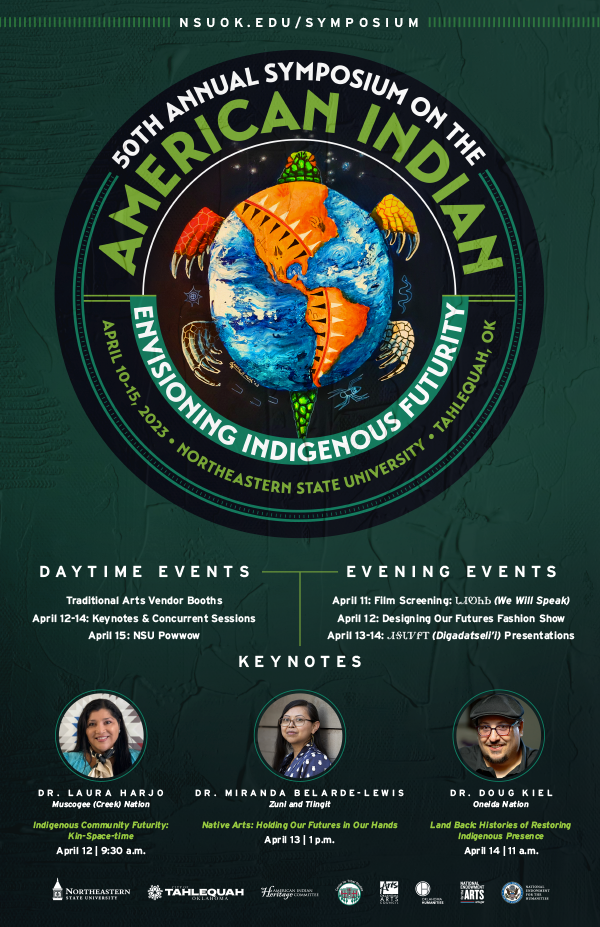
The MTH Workshop kickstarts NSU’s 50th Anniversary American Indian Symposium, “Envisioning Indigenous Futurity,” which is free and open to the public with various sessions and activities throughout the week. The symposium will celebrate fifty years of scholarship, broadening perspectives, community building, diversity, and culture since the annual symposium and gatherings of Native American knowledge-carriers began at NSU. 

Dr. Doug Kiel (Oneida Nation), Dr. Miranda Belarde-Lewis (Zuni Pueblo/Tlingit) and OU Native American Studies Department’s interim chair Dr. Laura Harjo (Mvskoke) will all serve as keynote speakers and the center of the 50th Annual Symposium on the American Indian. Learn more about the symposium at https://offices.nsuok.edu/centerfortribalstudies/NSUSymposium/default.aspx.

We hope that you can join us in Tahlequah for the MTH Workshop and NSU American Indian Symposium the week of April 10.

ᏩᏙ (Wado)/Ahéhee’/Thank you for your consideration.

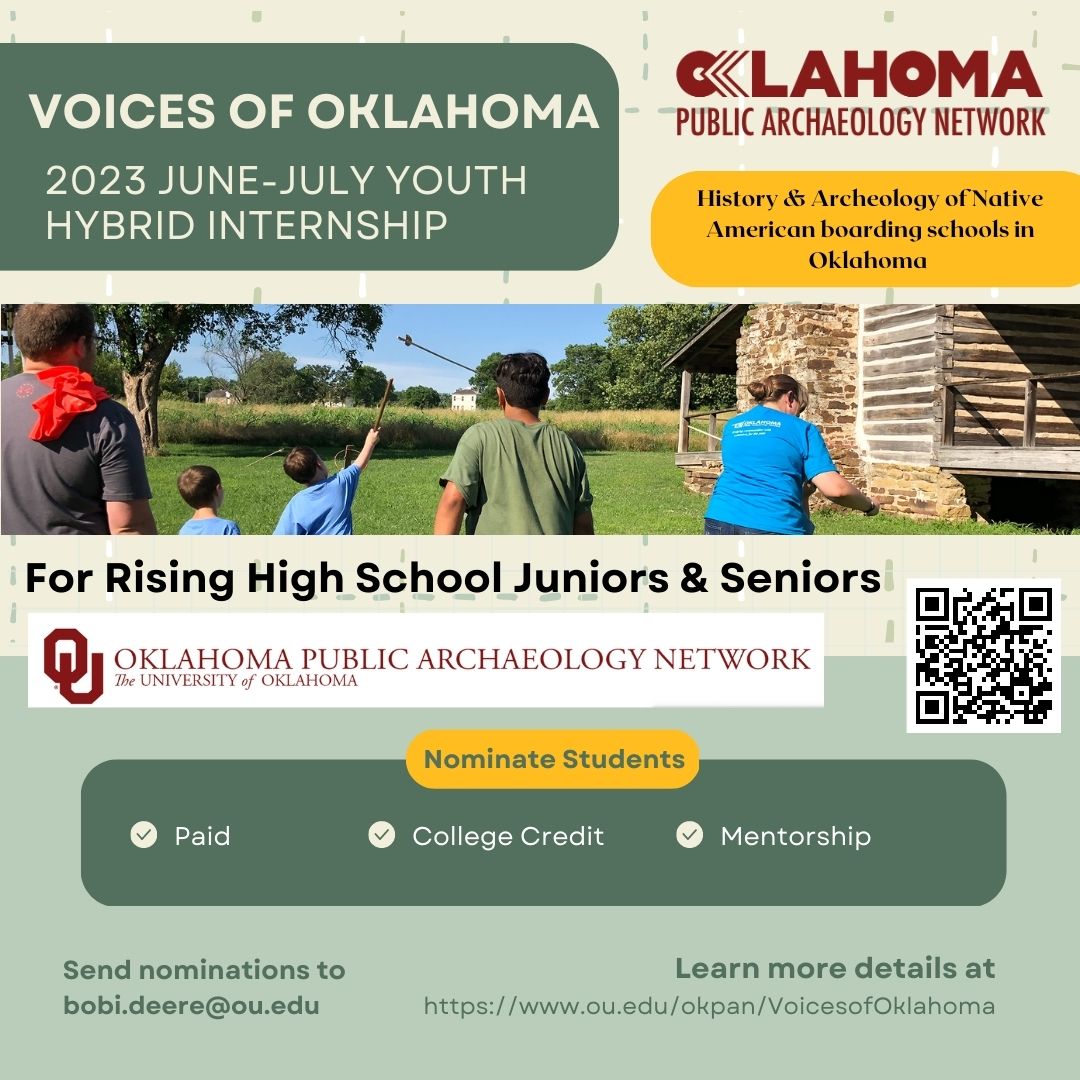
Oklahoma Voices 2023 Summer Youth Internship

Yá’át’ééh/Ahô!

We are asking for help identifying high school students (especially Native American students) who would be interested in a paid and for-credit University of Oklahoma internship, “Voices of Oklahoma,” this summer. The internship will teach up to ten (10) students about archaeology and how archaeology is being used to better understand Oklahoma’s people, with a focus on Native American boarding schools. This project will also mentor them in the production of the 2023 “Oklahoma Archaeology Month” poster (which will be distributed statewide in October 2023).

Voices of Oklahoma is one of the Oklahoma Public Archaeology Network’s signature programs for rising high school juniors and seniors from communities that have traditionally been excluded from archaeology.  

The summer internship this year will focus on the fraught history of Native American boarding schools in Oklahoma, and the goal is to introduce students—Indigenous themselves—to (1) archaeology, (2) boarding school history in the state, and (3) how archaeology can be used to empower communities to learn about and tell stories related to the role of boarding schools in their past.  

The internship will be co-taught by me (Dr. Farina King), in OU’s Native American Studies Department, who specializes in the histories of Native American experiences in boarding schools, and Bobi, Deere, a PhD candidate in anthropology at OU. We are working with Dr. Bonnie Pitblado who founded and directs the Oklahoma Public Archaeology Network (OKPAN), which sponsors a wide range of statewide programs, including the annual “archaeology month” each October, a biennial “Oklahoma Archaeology Conference,” curricula development for K–12 classrooms, an archaeological skills workshop series, and more.

We included key parts of the letter below that we use to recruit students for you to use and circulate as you see fit. Our approach is to target guidance counselors and teachers in particular, but other members of communities as well who might know of and be willing to nominate a student for the internship. We then reach out to nominated students and invite them to answer a few questions.  

Beyond seeking to teach about archaeology/history, we also aim to connect students to college, and we mentor them after the internship with the goal of helping them navigate the college application process (and if they come to OU, the transition to college).  

Students each receive 2 university credits to use at OU (or transfer elsewhere) and a financial stipend.  

We are looking for students who will be difference-makers within their own communities, and we make it clear to them that this is an ethic that underlies everything we cover.

Students are not expected to have any previous background in archaeology. Instead, we seek students who are:

  • Members of the Native American community will reserve top consideration, but we also welcome nominations of students from other communities historically excluded from archaeology (e.g., Black and Latiné students)
  • High school students in 2023-2024, with preference for rising juniors and seniors
  • Available to complete the internship in June and July 2023 (on a schedule to be determined by the needs of the participants, and that includes primary virtual instruction but also in-person field trips)
  • Intellectually curious
  • Creative (in thought and/or the fine and performing arts)
  • Socially conscious

Interns will receive:

  • OU course credit that can be applied at OU or transferred to any other college to which they later matriculate
  • A generous financial stipend to compensate for the days they may have to miss working at summer jobs

Interns will:

  • Learn archeological basics:  What is archaeology?  How do archaeologists collect data?  How can archaeology serve contemporary community members?
  • Learn (more than they already have) about the History of the American Indian boarding schools in Oklahoma
  • Meet archaeologists, historians, and others working on a variety of problems and using many different methods
  • Learn to effectively communicate a message to public audiences through visual and other media  
  • Apply what they learn through creation and distribution of the 2023 OklahomaArchaeology Month poster
  • Learn how archaeology is able to make a political and social impact
  • Receive mentoring after their internship that can carry them through and to college, if they wish

Nomination and selection process:  We will select interns on a first-come, first-served basis, based first on teacher or other community-member nominations and then upon a Zoom interview.  

If you know a student who you would recommend for this opportunity, please send a brief email with their name, a short explanation of their qualifications, and contact information for the student.   

Please send nominations to Bobi Deere (bobi.deere@ou.edu) as soon as possible, but by March 15, 2023 (please note that selection is first come, first serve, so if you know a particularly strong prospect, please submit their name ASAP).  

You can learn more about OKPAN and see the link to this recruitment letter at https://www.ou.edu/okpan/VoicesofOklahoma.

Thank you for your consideration and attention. Please let us know if you have questions, and many thanks for any help getting out the word!

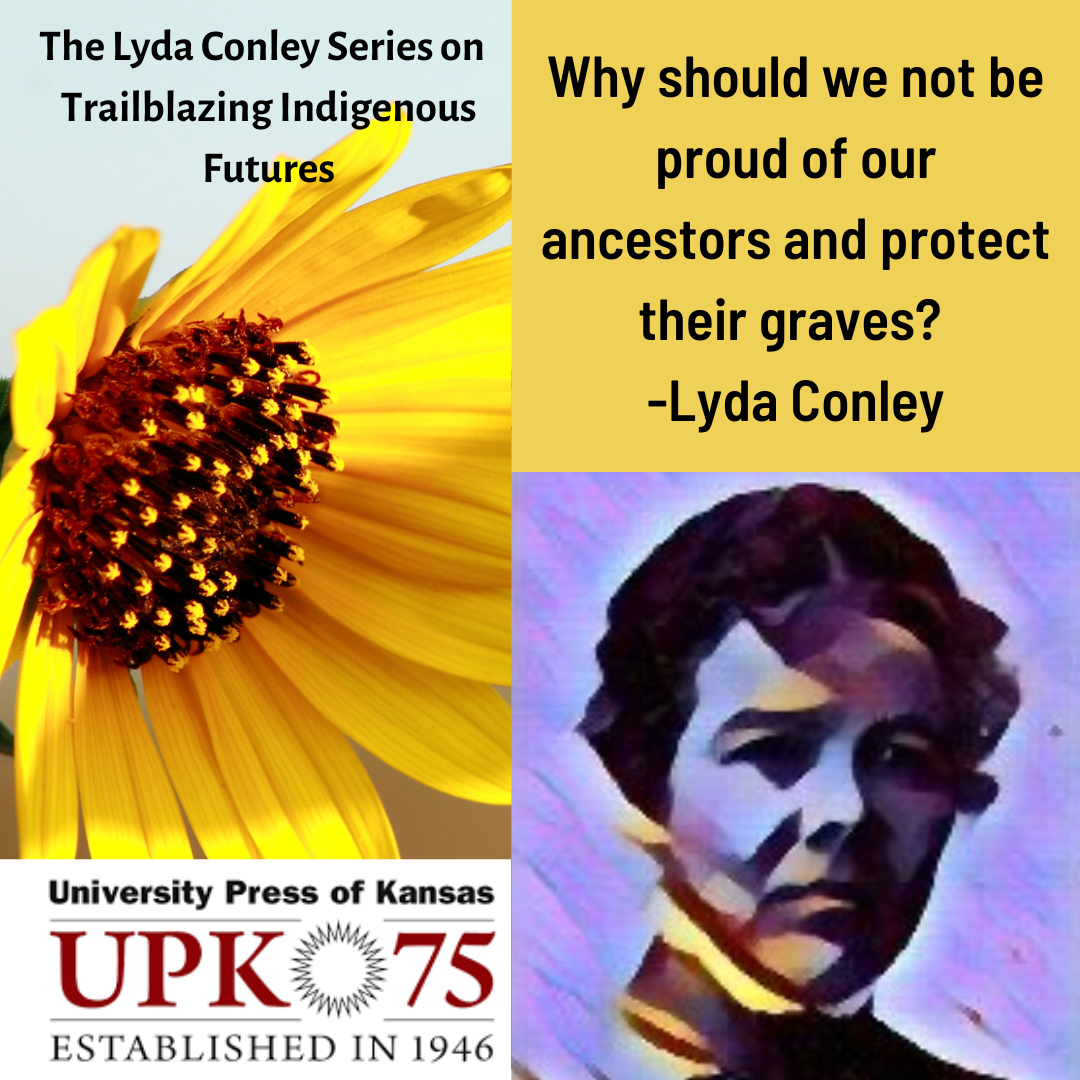
The Lyda Conley Series on Trailblazing Indigenous Futures

Lyda Conley’s life and experiences are so inspirational as one of the first Native American women known to argue a case before the U.S. Supreme Court, which she did in defense of her Indigenous ancestors and people. Her case was also one of the first in which “a plaintiff argued that the burying grounds of Native Americans were entitled to federal protection.” One of my students, Sarah (Wood) Fite James, brought Lyda Conley to my attention in her class research project, which the Museum of Native American History features on its website.

I am excited that the University Press of Kansas is launching this series in her honor, and I am privileged to serve as one of the series editors with Tai Edwards and Kiara Vigil. This is one of the first press series that I know of named after a Native American woman. Please help spread the word, and let me know if you have any questions and interests in the series. Thank you!

Check out the press release posted on October 6, 2022 by the University Press of Kansas about the new series.

Listen to the Native Circles episode now available with Farina, Kiara, and Tai, talking about the new series: https://www.buzzsprout.com/1811701/12247278

Please contact UPK senior editor David Congdon if you have any questions about the series and want to submit a proposal: dcongdon@ku.edu.

#LydaConley #IndigenousStudies #UniversityPressofKansas

Shizhé’é yázhi Albert Smith, Navajo Code Talker on a new journey

Farina King, April 17, 2013

“Some ask, ‘Why fight in the white man’s war? They put your family in prison, tortured them. They treated you as the second-class citizen without the right to vote.’ It is my freedom too, my happiness and family too. I stand up for Mother Earth. She stands for my freedom. I can play, dance, sing, and stand for life. If I’m overburdened, I can cry, that’s my privilege. I went to war, because a foreign country wanted to take my Mother Earth, my freedom.” -Albert Smith, 25 March 2005, Provo, public symposium, Brigham Young University, Provo.

In Bighorse the Warrior, Tiana Bighorse defines what a “warrior” means to the Navajo:

“In Navajo, a warrior means someone who can get through the snowstorm when no one else can. In Navajo, a warrior is the one that doesn’t get the flu when everyone else does- the only one walking around, making a fire for the sick, giving them medicine, feeding them food, making them strong to fight the flu. In Navajo, a warrior is the one who can use words so everyone knows they are part of the same family. In Navajo, a warrior says what is in the people’s hearts. Talks about what the land means to them. Brings them together to fight for it” (xxiv).

Many people recognized my uncle Albert Smith as a warrior, because he served in World War II as a Navajo Code Talker. Many people also knew Albert as a warrior in the Navajo sense of the title. I, Farina King, did.

I can present the basic biographical information about my uncle. Albert Smith was born December 13, 1924 near Mariano Lake, Navajo Nation, New Mexico. He attended boarding school as a child in Crownpoint, Navajo Nation, New Mexico. At the age of 15, he volunteered to serve in the U.S. military during WWII with his older brother, George Smith, providing false information about his age at the time to meet the requirements to join. He was selected to train as a Navajo Code Talker. He served in the 4th Marine Division. He faced combat and worked in military code operations on the Marshall Islands, Saipan, Tinian, and Iwo Jima. He traveled abroad again for the U.S. military to Korea and left right before violence broke out in the Korean War. Smith returned to Navajo lands after his military service, and then married Helen L. Brown on September 11, 1953.

Smith continued and finished his education to become a teacher for Native American students and worked at the Chemawa Indian School in Salem, Oregon for some time before returning to New Mexico to eventually settle in Gallup with his wife and their adopted daughter, Alberta. After retiring from teaching, he became active in the Navajo Code Talkers Association and served as its president for some time. He traveled extensively to speak publicly about his experiences as a Navajo Code Talker after the code was declassified in 1968. He participated in the making of documentaries and the writing of monographs concerning the history of the Navajo Code Talkers. He was also selected as the technical advisor for the film, Windtalkers, directed by John Woo in 2002.

At the age of 88 in the months before his passing, Smith continued to share his knowledge and experience with communities throughout the country.

What makes Albert a warrior to me in the Diné sense is that he always fought in life for the people he loved and the land. He touched many lives after his service in WWII as a teacher and parent. Helen and Albert opened their home to many children without a place to go. They opened their home to me and re-connected me with my Diné heritage and family. Shibízhí(my uncle) inspired me to pursue my dreams and passions, and to become a historian who could tell such incredible and touching stories as his own. He was the most spiritual person that I knew, reminding me that a Creator exists and cares for us his children. He taught me to respect all and our Mother Earth, and he showed me how the “mountain is our church.” The land orients us in our purposes and growth in life. I love you, Shibízhí, and I always will. I close with his own poem that he wrote in honor of his fellow veterans in World War II who passed on before him.

Rest in Peace

We are proud Americans,

Proud Navajo Marines

And, the Proud,

Humble Navajo Code Talkers.

Today as warriors

We stand before you with humility,

With honor and with pride.

These attributes, you left us to enjoy,

To care for, and to treasure.

With your passage through the shadow of death,

Came our precious Freedom, Liberty and Justice.

We survivors of these conflicts honor you,

With a special tribute;

Lend us your spiritual ears,

Drums of the ages have echoed

For you with songs and dances.

—poem by Albert Smith

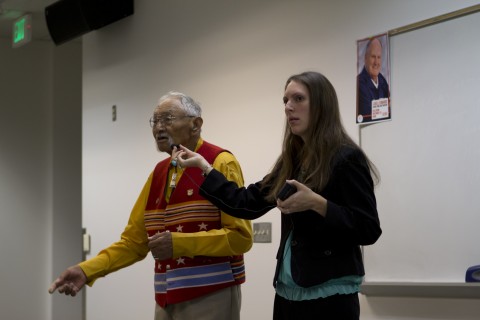
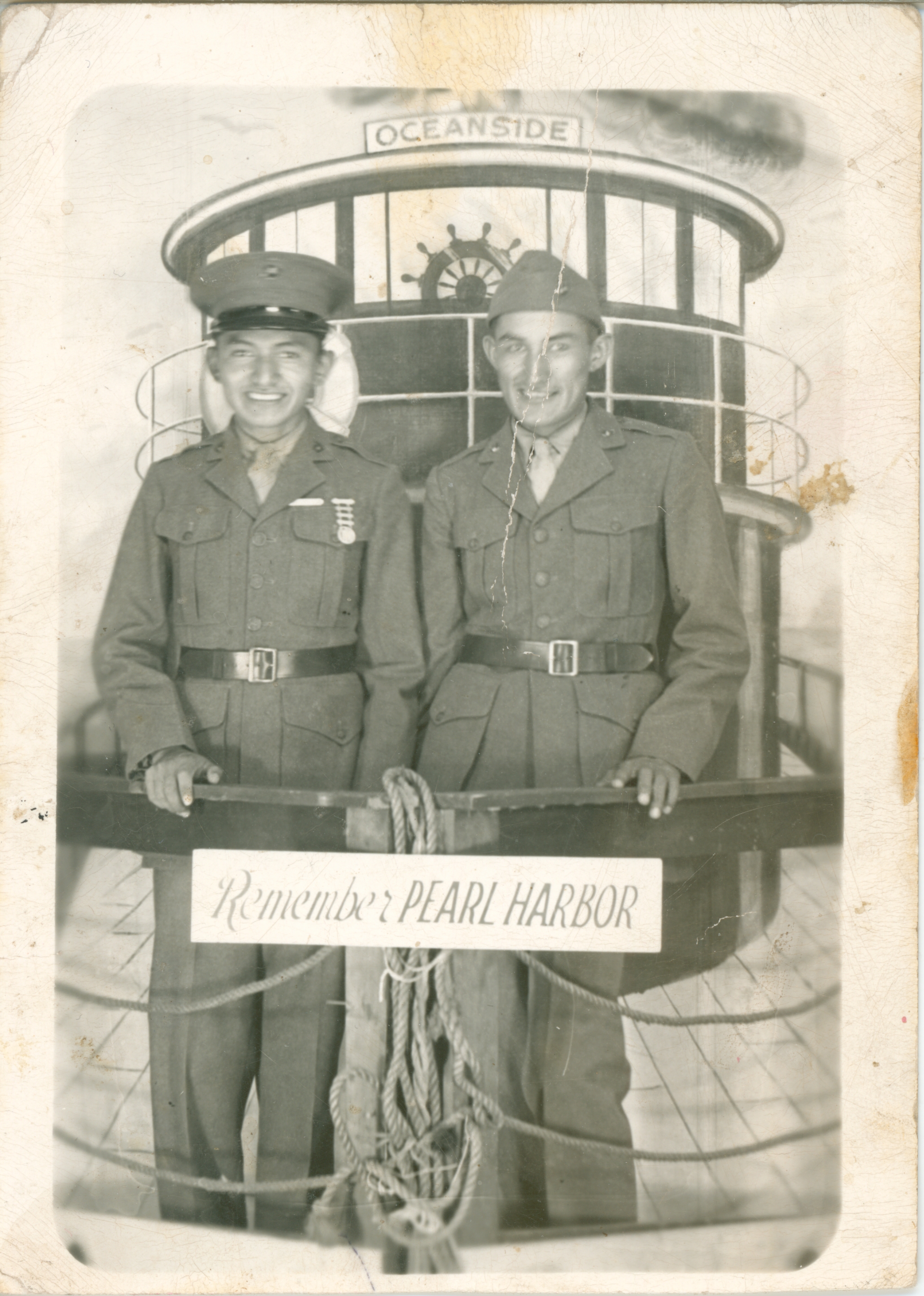
[Images at the top show Albert Smith visiting Farina King’s class and presenting at Utah Valley University in the fall of 2011; and the historic photo of Navajo Code Talker brothers and King’s uncles Albert Smith and George Smith with “Remember Pearl Harbor sign during World War II]
“COVID-19 in Indian Country” Edited Volume Call for Submissions

Please share this call for submissions with anyone who would be interested in contributing to this proposed edited volume. Ahéhee’/Thank you!

COVID-19 in Indian Country

Proposed Edited Volume

Call for Submissions

Submissions due by September 1, 2022

As the COVID-19 pandemic struck peoples throughout the world, Native American communities were disproportionately devastated by the disease. The death rates and suffering of Indigenous people caught some media attention, and health experts and scholars reaffirmed what many Native Americans already knew and lived on a daily basis– the inequalities, disparities, and injustices of being historically marginalized peoples. After surviving centuries of genocide, dispossession, and removal, COVID-19 perpetuated their intergenerational trauma. Human (in)actions and colonization have exacerbated the effects of natural disasters on Native Americans throughout history, as has been the case with COVID-19. This proposed edited volume seeks to tell these stories of Native Americans facing the matrix of disease and colonialism in the COVID-19 pandemic years since 2020 as well as highlighting the ways that Indigenous people have survived, innovated, fought, and thrived in such moments of catastrophe through time. What Native American memories and experiences have contextualized their responses to COVID-19? What kinds of intergenerational knowledge and ties have sustained Indigenous communities during the pandemic?

Please submit chapter proposals to be considered for this proposed edited volume tentatively titled, “COVID-19 in Indian Country: Native American Memories and Experiences of the Pandemic.” We welcome scholarly and creative pieces such as chapter-length manuscripts, poems, short stories, and visual art that relate to Indigenous perspectives and experiences of COVID-19 in the United States. Accepted chapter manuscripts can be of varying lengths but no more than 8,000 words.

Submit a title, abstract (no more than 300 words), a brief biography (no more than 200 words), and a one-page CV (include a list of publications and/or creative works) addressed to Drs. Farina King (University of Oklahoma) and Wade Davies (University of Montana) at nativehistorynerds@gmail.com (and/or farinaking@ou.edu) and wade.davies@mso.umt.edu. Submission materials are due by September 1, 2022. Drs. King and Davies will notify accepted contributors by September 30, 2022.